

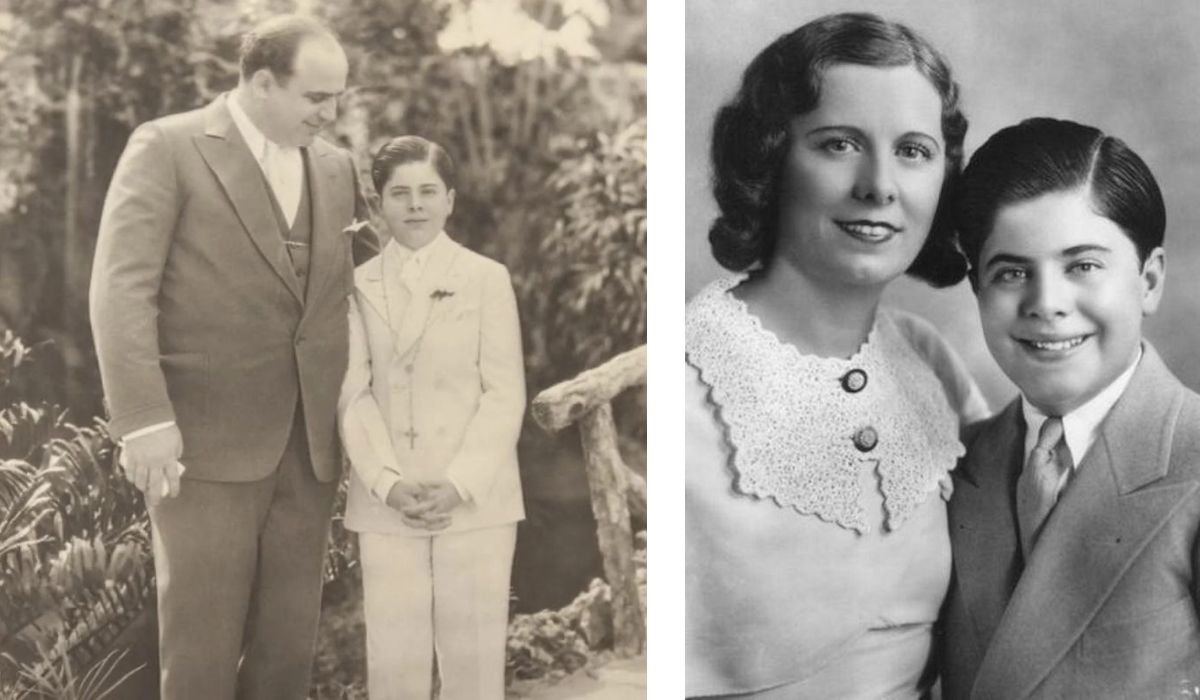
al capone son, famously known as “Sonny,” lived a life that stood in stark contrast to the violent legacy of his father. While the name Capone became synonymous with the brutal underworld of Prohibition-era Chicago, the al capone son pursued a path defined by normalcy and a desperate desire for anonymity. Born into the most scrutinized family in America, Sonny faced health struggles, intense public curiosity, and the heavy burden of a surname that represented chaos. His story is not one of crime, but rather a quiet, lifelong struggle to escape the long, dark shadow cast by his infamous progenitor.
| Attribute | Details |
| Birth Name | Albert Francis “Sonny” Capone |
| Born | December 4, 1918 (New York City) |
| Died | 2004 |
| Father | Al Capone |
| Mother | Mae Josephine Coughlin |
| Occupation | Various (Sales, Management) |
| Name Change | Albert Francis Brown (1966) |
The Early Life of the Only Son
Born in 1918, Sonny arrived at a time when his father was just beginning his ascent within the criminal syndicates of New York. As the al capone son, his childhood was far from ordinary, marked by the constant presence of security and the instability of his father’s criminal career. Suffering from congenital syphilis, which he inherited from his father, he endured significant health challenges. A severe mastoid infection at age seven required risky surgery, al capone son leaving him with permanent hearing loss in his left ear. This early trauma set a somber tone for a childhood defined by fragility and secrecy.
Growing Up in the Shadow of Infamy

Throughout his youth, the al capone son was shielded by his mother, Mae, as much as possible. While his father built a massive empire in Chicago, Sonny lived a life of relative seclusion. al capone son Even as the media and law enforcement obsessed over the activities of his father, Sonny attempted to navigate a normal academic environment. He attended St. Patrick High School in Miami, where he tried to maintain a low profile. Despite the efforts to keep him away from the spotlight, the notoriety of the Capone family name made it nearly impossible for him to exist as a typical teenager.
The Academic Years in Miami
After high school, Sonny enrolled at the University of Miami in 1937, a period he hoped would lead to a professional future outside of organized crime. Unlike many of his father’s associates, the al capone son was never involved in illicit activities. He focused on his studies and looked toward a quiet life. During this time, he met Diane Ruth Casey, who would eventually become his wife. His ability to graduate and move forward as a civilian was a testament to his desire to break the cycle of criminality that had consumed his father’s life and ruined his reputation.
The Burden of the Family Name
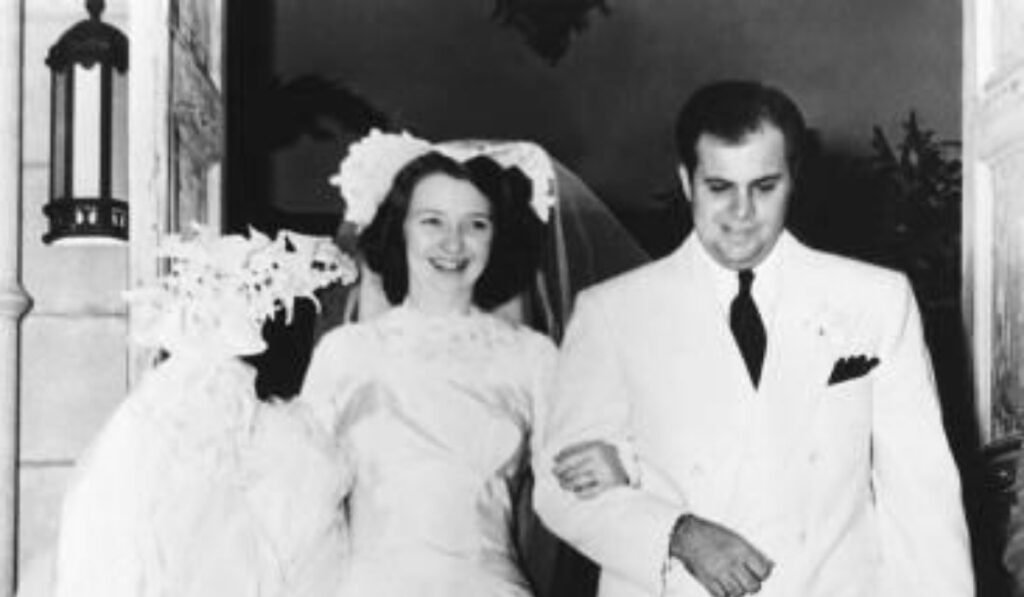
The name “Capone” was a constant obstacle for Sonny as he entered adulthood. Every business deal, social interaction, and professional milestone was colored by the sins of his father. The al capone son often found that doors were closed or opened for the wrong reasons due to his pedigree. This constant judgment weighed heavily on him, creating a profound sense of isolation. For most of his adult life, he dealt with the reality that he would never be seen simply as an individual, but rather as an extension of the most notorious gangster in American criminal history.
Marriage and Family Life
In 1941, Sonny married his high school sweetheart, Diane Ruth Casey, and eventually became a father to four daughters. This period of his life was the most domestic he would ever experience. The al capone son cherished the relative peace of raising a family in Florida. He worked various jobs, including in sales and management, attempting to build a stable foundation for his children. Despite his efforts, the shadow of his father’s past continued to loom, affecting his family’s privacy and forcing him to be hyper-vigilant about protecting them from the invasive reach of the media.
The Decision to Change His Name
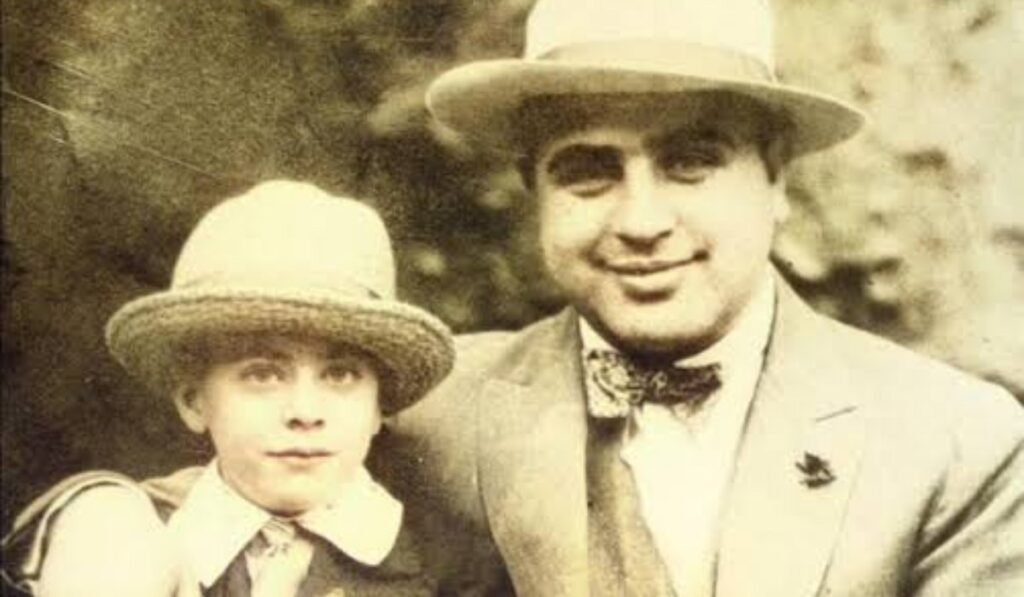
By 1966, the pressure of carrying the Capone legacy became unsustainable. In an act of liberation, the al capone son legally changed his name to Albert Francis Brown. This decision was a final attempt to sever the link to his father’s criminal empire and provide his family with a life free from the stigma of the past. By adopting the name Brown, he hoped to vanish into the normalcy he had always craved. It was a symbolic gesture, representing his lifelong effort to be recognized for his own merits rather than the infamous reputation of his father.
Coping with Health Challenges
Throughout his life, the health issues stemming from his childhood never fully left him. The al capone son had to manage the long-term effects of his early illnesses and the psychological toll of his family situation. He was known to be a private individual who rarely spoke about his father or his upbringing. This silence was his primary defense mechanism against a public that constantly sought to capitalize on his connections. His quiet demeanor reflected a man who had made peace with his past by choosing to stay away from the noise of the public eye.
The Father-Son Dynamic
The relationship between Al Capone and his son was complicated by the elder’s incarceration and subsequent decline. The al capone son was often separated from his father during his most impressionable years, especially after his father was sent to Alcatraz. When Al Capone was released in 1939, his health had severely deteriorated, and the dynamic between the two was strained by both the distance and the nature of Al’s failing mental state. Sonny visited his father during these final years, but the bond remained deeply affected by the shadow of the criminal life that had torn their family apart.
Living in the Public Spotlight
Despite his best efforts, the media never fully lost interest in the al capone son. Periodically, news outlets would run stories about “Al Capone’s heir,” often digging up old secrets or speculating about his life. These instances of intrusion were deeply painful for Sonny, who viewed his life as a private matter. Every time the press reached out, he was reminded that he could never truly escape his heritage. The constant cycle of unwanted attention forced him to remain guarded, reinforcing his choice to live a life of extreme discretion and quiet stability.
Employment and Career Struggles
Maintaining a career was a significant challenge for the al capone son. Employers were often wary of his name, and the potential for public gossip made it difficult for him to hold long-term positions. Throughout his adulthood, he took on various roles, working in retail and management. He never sought the kind of power his father enjoyed, preferring the safety of relative anonymity. This professional path showed that he valued honest work, even if the stigma of his past often made finding and keeping a stable job an uphill battle throughout his middle age.
The Divorce and Remarriage
The strain of the Capone legacy contributed to personal hardships, including his divorce from Diane in 1964. The emotional toll of being married to the al capone son was undeniably immense, as his family was constantly living in the spotlight. Sonny later remarried, attempting to find a new sense of peace in his later years. His personal life was marked by the same desire for normalcy that drove all his other decisions. He navigated these transitions with a quiet resilience, always looking for a way to maintain his personal relationships outside the reach of his father’s reputation.
Relationship with His Sisters and Mother
Sonny maintained a strong bond with his mother, Mae, who was his primary protector. Following the death of his father, the al capone son remained a pillar of support for his mother as she navigated her own life in Florida. He also cared for his family, consistently prioritizing the needs of his daughters above the circus of his father’s history. His commitment to his family was his defining characteristic, showing that he prioritized the people he loved over the notoriety that often follows those who carry a famous name. He was a father first and a Capone second.
The Mystery Surrounding His Death
Albert Francis Brown passed away in 2004, but even his death was shrouded in the same quiet mystery he cultivated during his life. There was some confusion regarding the exact date of his passing, with reports suggesting July 8 or August 4. This ambiguity was fitting for a man who spent his life trying to vanish from public record. The al capone son died in California, finally free from the scrutiny of the world. His passing marked the end of a long, often difficult journey to reclaim an identity stolen by his father’s actions.
Perspectives on His Legacy
History often remembers the al capone son as a footnote to the life of the famous gangster. However, those who knew him or have studied his life recognize his story as a triumph of character. He refused to follow in his father’s footsteps, choosing instead to live as an honest citizen despite every opportunity to exploit his name for profit. His legacy is one of silent resistance against the pull of organized crime. By rejecting the underworld, he proved that one’s destiny is not determined by the name they are given at birth.
The Influence of the Capone Name Today
Even years after his death, the Capone name continues to hold a fascination for the public. Documentaries, books, and articles frequently revisit the life of the al capone son in an attempt to understand how he survived the pressure. The legacy of his father remains a popular topic in American culture, but the story of Sonny offers a counterpoint to the glamour of the mafia. He represents the hidden, human cost of a criminal empire, reminding us that for every gangster in the headlines, there is a family left to bear the weight of the consequences.
Contrasting Father and Son
The contrast between Al Capone and his son is stark. Al Capone thrived on noise, violence, and public attention, while the al capone son sought quiet, peace, and invisibility. One built an empire on blood and fear, while the other worked to build a life on integrity and privacy. This divide is what makes his story so compelling. It demonstrates that environment and background do not dictate one’s moral compass. Sonny’s life remains a powerful example of an individual choosing a righteous path despite being born into the center of a corrupt world.
Historical Misconceptions
Common misconceptions often paint the al capone son as a participant in his father’s schemes or as a beneficiary of his fortune. In reality, he lived a modest life, often struggling to make ends meet just like any other person. He did not inherit the vast wealth associated with the Capone syndicate, as most of it was seized, spent on legal fees, or lost. The idea that he was living in luxury is a myth perpetuated by those who don’t understand the reality of his struggle. He was, by all accounts, a man who lived an ordinary, working-class life.
The Long Road to Anonymity
Achieving anonymity was the primary goal of the al capone son from the moment he entered adulthood. His name change was the culmination of this desire. By scrubbing his identity of his father’s surname, he hoped to leave the past behind once and for all. While he was never truly able to escape the interest of the public, he did succeed in living a life that was distinctly his own. He was a husband, a father, and a worker, roles that he valued far more than the notoriety associated with his original family name.
Analyzing the Impact of His Silence
The silence of the al capone son was one of his most powerful tools. By refusing to give interviews or cooperate with those who wanted to sensationalize his life, he denied them the fuel they needed to keep his father’s legacy in the spotlight. This restraint was an act of defiance against a media culture that views famous people as public property. He showed that he did not owe the world his story, and his privacy was his alone to protect. In an age of oversharing, his commitment to his own silence was perhaps his most revolutionary act.
Final Reflections on His Life
The life of Albert Francis Brown, born as the al capone son, is a complex narrative of resilience. He survived the health scares of his childhood and the intense pressure of his father’s fame to carve out a life of his own making. While his name was stolen by history, he ultimately took it back by living on his own terms. His story is not just about the son of a gangster; it is about the power of personal choice. He remained a man of quiet strength, a silent observer of the legacy he never asked to inherit.
FAQs
- Did the son of Al Capone ever get involved in organized crime?
- No, Albert Francis “Sonny” Capone intentionally lived a life far removed from crime and avoided his father’s illicit business dealings.
- Why did he change his name to Albert Francis Brown?
- He changed his name in 1966 to distance himself from the infamous Capone surname and to escape the constant public scrutiny he faced.
- What was his relationship like with his father?
- Their relationship was strained due to his father’s long periods of imprisonment and his rapid decline from illness during Sonny’s adulthood.
- Did he live a wealthy life?
- No, he lived a modest, working-class life and did not inherit the vast wealth or criminal empire associated with his father.
- How did he deal with his father’s reputation?
- He maintained extreme privacy, rarely gave interviews, and lived as quietly as possible to protect himself and his family from the media’s obsession.
